Google AI Mode is Google Search run as a conversation. Ask it a question and you get a written answer in place of a ranked list of links, and you can keep asking. It answers more than a billion people a month, by Google’s count at I/O in May 2026, and Google has published the mechanism behind those answers without publishing what determines which pages it picks. The same announcement said AI Mode queries have more than doubled every quarter since launch. Getting cited in Google AI Mode is, on the evidence available, the work of being selected across the cluster of searches Google runs behind a single question, and that framing decides most of what follows.
Neither of the two current studies puts the top-ten share of cited pages above 40%, and Google’s AI features show no measurable preference for recently published content. A third study puts a number on what a citation is worth in clicks.
AI Mode and AI Overviews are one flow with two citation logics
AI Overviews are the AI-generated summaries at the top of a standard Google results page. Google’s Search Central documentation describes AI Mode as “particularly helpful for queries where further exploration, reasoning, or complex comparisons are needed.” At I/O 2026 Google connected the two. A user can now ask a follow-up question from an AI Overview and, in Google’s words, “flow into a conversational back and forth with AI Mode.”
The connection is a change to the user flow, and the two surfaces select independently. Google’s documentation says AI Mode and AI Overviews “may use different models and techniques,” and Ahrefs has measured how far apart the results land. Across 540,000 query pairs from September 2025, Ahrefs found the two surfaces cited the same URL for the same query only 13.7% of the time, or 16.3% when restricted to each surface’s top three citations. The rank and click-through datasets cited below, from Ahrefs and Seer Interactive, measure AI Overviews. Our earlier guide covers getting cited in Google AI Overviews on its own terms.
Step 1: Getting cited in Google AI Mode starts with the only test Google has published
Google has published exactly one eligibility rule for its AI features, and it is the same rule that governs standard search. Search Central’s documentation states that “to be eligible to be shown as a supporting link in AI Overviews or AI Mode, a page must be indexed and eligible to be shown in Google Search with a snippet, fulfilling the Search technical requirements. There are no additional technical requirements.” The same page adds that “while specific optimization isn’t required for AI Overviews and AI Mode, all existing SEO fundamentals continue to be worthwhile”, and goes on to list them.
There is no application and no special markup. If Googlebot can reach the page and it can appear with a snippet, it is in the pool.
The second half of that test is the one to check on a B2B site. Pages that restrict snippets, through a meta directive left over from a legal review or a template setting inherited from a previous CMS, pass the indexing requirement and fail the snippet one. Comparison and pricing pages still carrying a noindex from a long-ended campaign fail the indexing half instead. Before any content work, confirm each page you want selected returns in standard Google Search with a visible snippet. It takes an afternoon.
Google’s AI features documentation does not address E-E-A-T as a citation-selection factor for AI Mode. And registering your brand in Google’s Knowledge Graph is sound SEO housekeeping, but Google has published nothing connecting it to AI citation rates.
Step 2: Cover the sub-queries behind the buyer’s question
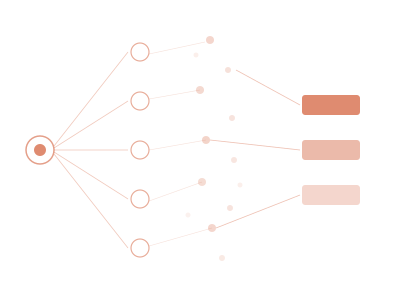
Google confirms that “both AI Overviews and AI Mode may use a ‘query fan-out’ technique”, which it describes as issuing multiple related searches across subtopics and data sources to develop a response. This is the only selection mechanism Google has documented, and it changes what a content brief is for. A page is competing to answer one of the several searches Google generates from the buyer’s question, and the buyer never sees those searches.
The organic-rank data is consistent with that mechanism. Ahrefs’ 2026 analysis of 863,000 keyword SERPs and 4 million AI Overview URLs found that 37.9% of cited URLs also appeared within the first ten blocks of the results page, counting ads, featured snippets, People Also Ask boxes and video packs as blocks. Restricted to standard organic listings, Ahrefs found 37.1% ranked in the top ten, 26.2% in positions 11 to 100, and 36.7% beyond position 100. Ahrefs’ July 2025 study had put the top-ten figure at 76.10%.
Just 37.9% of AI Overview-cited URLs ranked in Google’s top 10 for the same query in Ahrefs’ 2026 study. Ahrefs’ July 2025 study had put the figure at 76.10%.
Ahrefs, 863,000 keyword SERPs, 4 million AI Overview URLs · 2026
The 2025 study analysed only the top three most visible citations in each response, 1.9 million citations from a million AI Overviews. The 2026 study placed no such restriction on its 4 million cited URLs. Ahrefs also discloses that its parsing improved between the two studies. Search Engine Journal, reporting on the 2026 study, put it plainly: “That makes the two datasets not directly comparable. Some of the drop could reflect better detection of citations that were previously missed rather than a pure change in how Google selects sources.” The same report notes a separate BrightEdge analysis from February 2026 that found roughly 17% top-ten overlap with a different dataset and method, and summarises the evidence as “two separate studies put the number between 17% and 38%.”
Neither current study puts the top-ten share above 40%, so the majority of AI Overview citations come from pages that do not rank in the top ten for the keyword. Whether the share fell from 76% or was always lower than the 2025 method suggested, a top-five ranking for the head term does not on its own get you in.
The mechanism explains why it would not. If AI Mode issues six searches for “best procurement software for mid-market finance teams,” a page ranking first for that phrase tells you about one retrieval out of six. The page that covers approval workflows, ERP integration, implementation time and pricing model in retrievable sections has more chances to be selected than the page that ranks higher and covers features.
Header and opening line are where those chances are won or lost. A header written as a label gives the retrieval system little to match against a sub-query. The pair below is illustrative.
Weak version:
Integration capabilities
Our platform was built from the ground up with integration in mind, and we work closely with customers to ensure their existing systems connect smoothly.
Strong version:
Which ERP systems does mid-market procurement software integrate with?
We ship native connectors for NetSuite, Sage Intacct and Microsoft Dynamics 365 Business Central, and handle SAP and Oracle through a paid integration layer. Native connectors sync purchase orders and supplier records in both directions; the integration layer is one-way.
The second version gives the system a passage that maps onto a sub-query about ERP integration.
Before restructuring a page that already ranks in Google’s top five for its keyword, check its organic traffic. For those pages, add a query-formatted section as new material and leave the existing sections intact. Rewriting a page that earns consistent organic traffic to chase AI selection is a trade to make with data in hand, and usually one to decline.
Step 3: Add a video where Google is reaching for one
YouTube is the most-cited domain in AI Overviews in Ahrefs’ data, with citations up 34% over six months and YouTube URLs making up 5.6% of all AI Overview citations. Among cited URLs that rank outside the top 100 for the keyword, Ahrefs found 18.2% are YouTube. That suggests a large share of video is selected through a path that does not run through the organic ranking for the keyword.
That is an AI Overviews finding, and it is where the AI Mode evidence points the other way. In Ahrefs’ comparison of the two surfaces, YouTube held the top position in AI Overviews, which cited videos and core pages nearly twice as often as AI Mode. AI Mode leaned instead toward encyclopedic sources, citing Wikipedia about ten points more often and Quora three and a half times more often.
Fan-out still makes a case for video on both surfaces. Some of the searches Google generates behind a buyer’s question are demonstration questions. What does the approval flow look like. How long does the NetSuite connector take to set up. For those, a two-minute screen recording is often the better answer.
This material usually already exists in demo recordings and onboarding webinars. Publishing the clip to YouTube under a title that matches the sub-query, and embedding it on the page that answers the same question in text, gives Google a selectable video and a selectable passage for the same retrieval.
The failure mode is the 45-minute webinar uploaded under its own name, with the answer at minute 31 and nothing in the title or description to say so. Cut the segment out and title it as the question.
The bet differs by surface. For AI Overviews, Ahrefs’ data establishes that YouTube is selected heavily and often from outside the ranking, though not that a given brand’s clip will be. For AI Mode, where the same firm found video cited at roughly half that rate, the clip is an addition to a text page that already answers the sub-query, and the text page carries the case.
Step 4: Stop paying for freshness on stable content
A claim circulates in AEO guidance that Google’s AI features overwhelmingly favour content published in the last two years. We could not trace that claim to a primary source, and the largest dataset we found says the opposite for Google.
Ahrefs analysed 16.975 million cited URLs across seven AI platforms. For Google AI Overviews, measured on the top three citations in each response, the average cited page was 1,432 days old, or 3.9 years. Organic Google results in the same study averaged 1,416 days. That made Google the oldest-citing platform in the analysis, with Perplexity at 1,166 days, Gemini at 1,118, Copilot at 1,056 and ChatGPT between 958 and 1,023 depending on the count. Averaged across ChatGPT, Perplexity, Copilot and Gemini only, Ahrefs found AI-cited URLs were 25.7% “fresher” than organic results. Google’s AI Overviews were the exception, and Ahrefs’ own conclusion is that “Google is the least influenced by content freshness.”
One wrinkle in the source will confuse you if you go and read it. Ahrefs’ summary text describes the 1,432-day figure as the organic search average, while its own data table assigns 1,432 to Google’s top-three AI Overview citations and 1,416 to organic. We have used the table values, and the gap between the two figures is sixteen days either way.
A well-maintained explainer written in 2023 has no measured freshness preference working against it, and changing the publish date without adding substantive content is unlikely, on this evidence, to produce anything. Spend that budget instead on the Step 2 sub-query sections, added to pages that already have age behind them.
The caveat is query type. Fan-out can plausibly generate time-sensitive sub-queries for pricing or release notes, and for those pages currency is part of the answer. For a definition page or a comparison whose criteria have not changed, the data does not support treating age as a problem.
Two limitations sit under this step. The freshness data measures AI Overviews, and whether AI Mode weights content age the same way has not been measured. And the Google figure is computed on the top three citations per response, so it describes the most prominent sources only.
Step 5: Turn on the measurement Google now provides, then supplement it
On June 3, 2026, Google’s Hillel Maoz and Moshe Samet announced Search Generative AI performance reports in Search Console, initially for a subset of websites. Google’s Search Console Help documentation now states the reports reached all websites worldwide as of August 31, 2026. They show impressions in generative AI features by page, country, device (Search only) and date.
The reports arrived with regulatory context. According to Search Engine Journal’s reporting, Google announced them alongside an opt-out control for generative AI features on the same day the UK Competition and Markets Authority issued a conduct requirement obliging Google to let sites opt out of AI search features without being penalised in standard rankings. Testing began with UK site owners, the switch operates at the property level, and the CMA has given Google until March 2027 to add page-level controls.
What the reports leave out is more important for tactical work. They carry no click data or click-through rate, and no query dimension. At publication the report tells you that a page appeared, and leaves you to work out which question it appeared for.
That gap is why a manual query panel is still necessary. Build a set of 20 to 30 evaluation-stage questions your buyers ask once past the head term, the comparison and how-does-it-handle questions, and run them in AI Mode on a fixed day each week. Record whether your domain appears among the sources, and which page. It is tedious and does not scale past a few dozen queries, but it establishes the query-to-page mapping Search Console cannot.
Google has published nothing about what determines a response’s source presentation. Record what the response showed instead of forcing every observation into a cited-or-not column.
Measure at the page level, or you are measuring Google
Three measures, read together over eight to twelve weeks, tell you whether the steps above are changing anything.
Start with generative AI impressions in Search Console for the specific pages you changed, compared against similar pages you left alone. Site-wide impressions move with query volume and Google’s own product changes, so only the page-level comparison isolates your work.
Alongside that, track the share of your manual query panel where your domain appears among the sources, week by week. Expect it to move in steps rather than along a curve, because a page either gets picked up for a sub-query or it does not.
The measure that carries the commercial case is organic click-through rate on queries where an AI Overview is present. Seer Interactive’s April 2026 study covered 53 brands, 5.47 million tracked queries and 2.43 billion organic impressions from January 2025 to February 2026. Brands cited in an AI Overview earned 120% more organic clicks per impression than uncited brands on the same AI Overview query. Seer attaches a qualifier to that figure immediately after, and it belongs wherever the figure is quoted. Organic CTR for cited brands on AI Overview queries still runs 38% below CTR on queries with no AI Overview. In Seer’s words, “It’s not a return to the pre-AIO baseline.” The 120% compares cited with uncited brands where an AI Overview already exists; the 38% compares against queries with no AI Overview.
The paid side of the same study is steadier. Seer found brands cited in the AI Overview held a paid click-through advantage of more than four percentage points in every month of 2025. And organic CTR on AI Overview queries recovered from a floor of 1.3% in December 2025 to 2.4% by February 2026, an 85% rebound. Both figures describe AI Overviews, and neither has an AI Mode equivalent yet.
Allow a full recrawl before judging content changes. Eligibility follows standard indexing in Google’s framing, so a restructured page cannot be selected before it is re-indexed. Give page-level impressions at least two months to separate from noise.
A worked example
As a hypothetical, take a procurement platform selling to finance teams at companies with 500 to 2,000 employees. Its highest-value AI Mode question is “best procurement software for mid-market finance teams.” The site ranks fourth for the head term with a features page.
The team lists the sub-queries that question implies. Approval workflow design. ERP integration by system. Implementation timeline for a 30-person finance function. Pricing model and what drives the price up. Migration from spreadsheets and email. Five sub-queries, and the ranking page answers none of them in a retrievable section.
They leave the ranking page alone apart from appending a query-formatted section on ERP integration, and publish two new pages. One answers the implementation timeline question with a stated range and the factors that move it. The other compares six procurement tools against four disclosed criteria, with their own product second on one of them. A three-minute clip from the onboarding webinar, cut to the approval-workflow segment and titled as the question, goes on YouTube and is embedded on the page. Every page passes the snippet test on day one, and none is date-stamped as new.
At week ten, Search Console shows generative AI impressions on the two new pages and none on the untouched control pages. The manual panel shows the domain among the sources for two of the five sub-queries and still absent for the head term. That is a normal result, and it is what fan-out predicts.
Common mistakes
Reading AI Overviews data as AI Mode data. Ahrefs found the two surfaces cite the same URL for the same query only 13.7% of the time, and every other dataset in this article measures AI Overviews. Teams that apply an AI Overviews finding to AI Mode and then treat the absence of movement as a content problem are debugging the wrong system.
Answering the head term and calling it done. Both current studies of AI Overview citations put the top-ten share below 40%. A single ranking page is one retrieval among several, and the sub-queries it does not address are slots it cannot win.
Refreshing evergreen pages on a schedule. On Ahrefs’ freshness data, Google’s AI features cite content of the same average age as organic search. Date-bumping a stable page is cost without evidence of return, unless the page serves a time-sensitive sub-query.
Quoting the 120% figure without the 38%. The citation premium is measured against uncited brands on the same query, not against the click volume the query used to deliver. A business case built on the first number alone will be asked about the second.
What this playbook won’t achieve
It will not tell you why AI Mode picks a page that AI Overviews does not. Ahrefs’ 13.7% overlap figure quantifies how far the two surfaces diverge without explaining the mechanism. No published study isolates which page-level attributes cause selection into AI Mode, rather than describing what it cites, so the steps above rest on Google’s documented mechanism and on AI Overviews data used as a proxy.
It will not restore the clicks an AI Overview removed. Seer’s data puts a cited brand 38% below the no-AI-Overview baseline. Selection recovers part of the loss and the steps above raise your odds of being selected; they do not change the size of what is being recovered.
It will not settle whether rank got weaker or measurement got better. The fall from 76.10% to 37.9% in Ahrefs’ top-ten overlap mixes a scope change and a parsing change with any real change in Google’s selection. We are confident the majority of citations now come from outside the top ten. We are not confident how much of the drop is Google.
It will not give you a uniform definition of “cited.” Google has not published what determines an AI Mode response’s source presentation, and practitioners report that it varies by response type. State the definition your panel uses and keep it fixed.
Query fan-out makes AI Mode citation a selection problem rather than a ranking problem. Ranking was a contest for one position on one query. Selection is a contest for a place among the sources behind several searches the buyer never typed, on surfaces that report impressions but not the question that produced them. The teams that adjust stop asking where a page ranks and start asking which sub-queries it can be retrieved for, then build the panel to find out. Why AI Mode selects a page that AI Overviews passes over is the question the next year of research needs to answer.
Aiviara is building infrastructure for monitoring AI brand citations and factual accuracy across LLM platforms. Early access information is available at aiviara.com.